The Cathedral Church of the Redeemer and Sixty Years of Temporary
Calgary Before the Skyline · Part 2 of 4
Calgary gave the Church of the Redeemer a temporary cathedral title in 1889.
It took sixty years to make the arrangement permanent.
For a city accustomed to planning something bigger, it is an especially fitting church story. Redeemer was the pro-cathedral, the bishop’s temporary church, while a grander cathedral remained a future possibility. In 1949, the temporary title finally went.
The church people had been using would do very well.
The cathedral’s history records that long interval. It began in one building and ended in another, which is where the story becomes important for anyone hunting for Calgary’s oldest church.
First wood, then sandstone
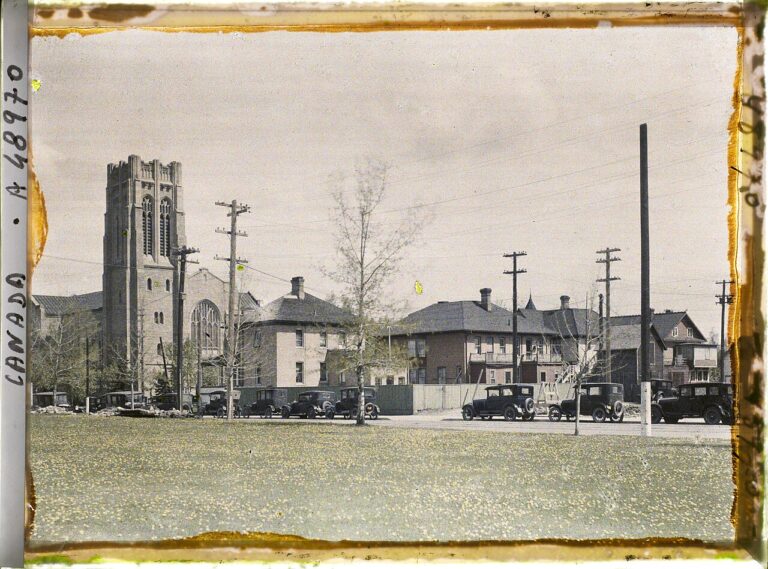
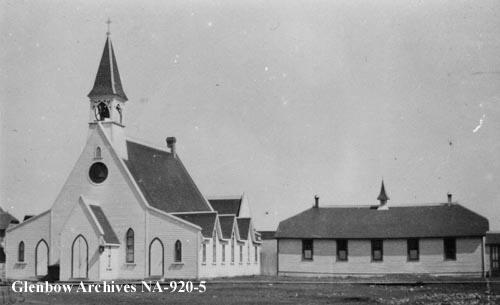
The original Church of the Redeemer opened for worship on August 3, 1884. It was a wooden building just east of the present cathedral, on the site now known as Paget Park.
Five years later, it became the pro-cathedral. That title described its role as the bishop’s church; it did not mean the congregation was sitting in a temporary shelter.
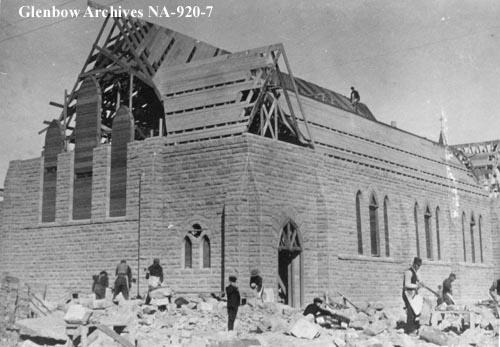
By 1905, the parish had replaced the wooden church with the sandstone building familiar to Calgarians today. The first services in the new church took place on July 30.
This distinction matters. The cathedral’s story reaches back to the 1880s, but the stone walls you can visit belong to the next chapter.
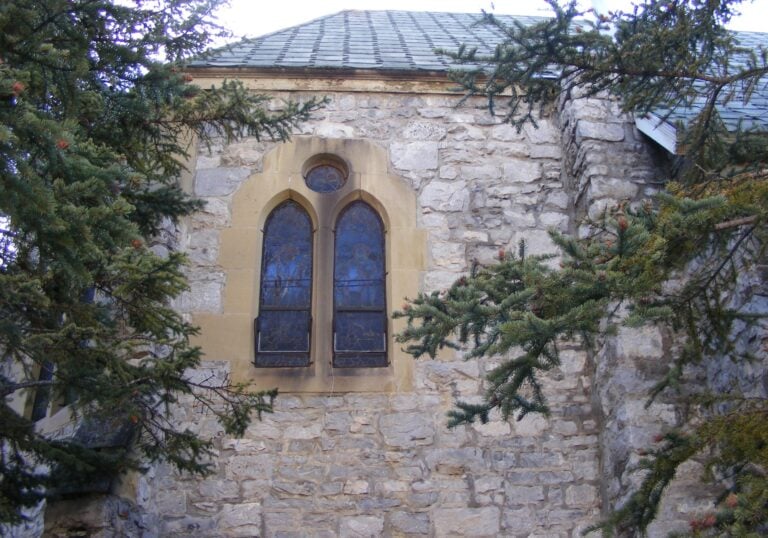
It is also worth looking at what the builders chose. The architect, J. C. M. Keith, designed a church with a relatively low, compact form and no great tower. Its pointed windows and buttressed walls recall English parish churches.
The sandstone came from the Lewis Quarry, between West Nose Creek and Nose Hill Park. The same quarry supplied stone for Calgary’s City Hall. The city’s heritage statement traces that local connection.
A piece of the landscape became part of the city’s public life, shaped into walls for council business in one place and worship in another.
The windows that made the move
The old wooden church disappeared, but some of its windows came along.
Three stained-glass windows were transferred to the new building in 1905. They depict the Good Shepherd, the raising of Jairus’s daughter, and Christ as Alpha and Omega.
That is a lovely detail to carry through the door. Some of the light in this sandstone church comes through glass that people had already gathered beneath in its wooden predecessor.
Alberta’s heritage record identifies the transferred windows, alongside the carved woodwork and other features that give the interior its character.
One later addition remembers people lost in the First World War. An oak rood screen, the carved screen near the chancel, was dedicated by the Prince of Wales in 1919. Looking at it brings a different generation into the building: the congregation that lived through the First World War and made room for remembrance afterwards.
There is plenty to notice without knowing every architectural term. Start with the ceiling, then look at a window, then read a memorial. The building becomes more personal as individual names emerge.
A cathedral that earns its place
By 1949, plans for a much larger cathedral had given way to recognizing Redeemer as the permanent cathedral church.
The title catches the attention, but the years of ordinary use are what make it interesting. People had been baptized, married and mourned while the grander plan remained unsettled. A future building had not prevented a congregation from making a home in the one it had.
That life continues. The cathedral remains a worshipping community in the downtown core. Its music also offers another way to come inside: the ProArts Society presents free Wednesday noon-hour concerts there. Check the concert programme for current arrangements.
If you have repeatedly passed the church on your way somewhere else, make it the destination once. Contact the cathedral about visiting, or choose a service or concert from its current calendar.
You do not need to imagine the enormous cathedral Calgary might have built. There is a very good one here already, with a sixty-year story behind the moment it officially became permanent.
Explore churches in Calgary through FaithFinder’s directory.
Photo Attribution: Church of the Redeemer, Anglican church, Calgary, Alberta.”, [ca. 1900-1903], (CU1156861) by unknown. Courtesy of Glenbow Library and Archives, Glenbow Archives Collection, Libraries and Cultural Resources Digital Collections, University of Calgary
Next: Old St. Patrick’s Midnapore and the Little Church That Came Back.