Prairie Churches Near Calgary and the Communities That Keep Them Standing
Prairie and Foothills Faith: Part 3 of 3.
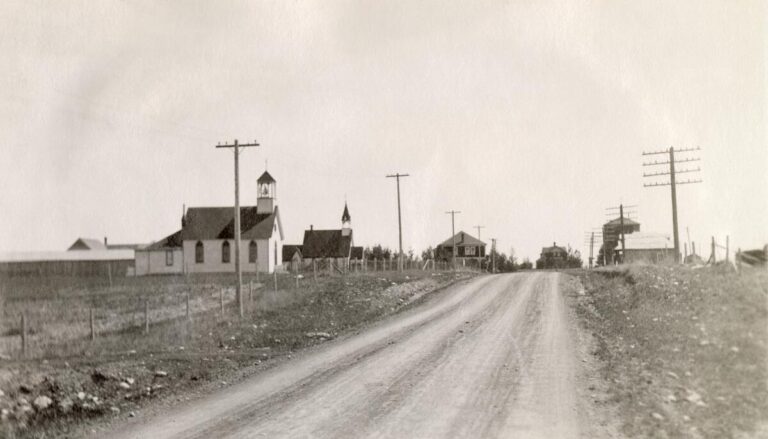
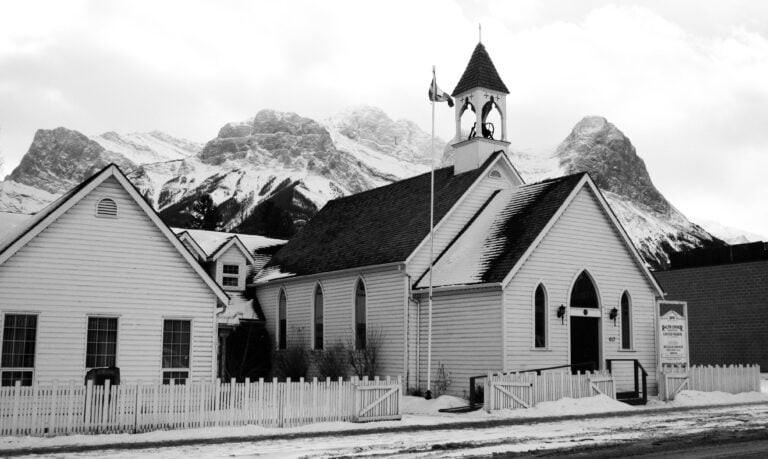
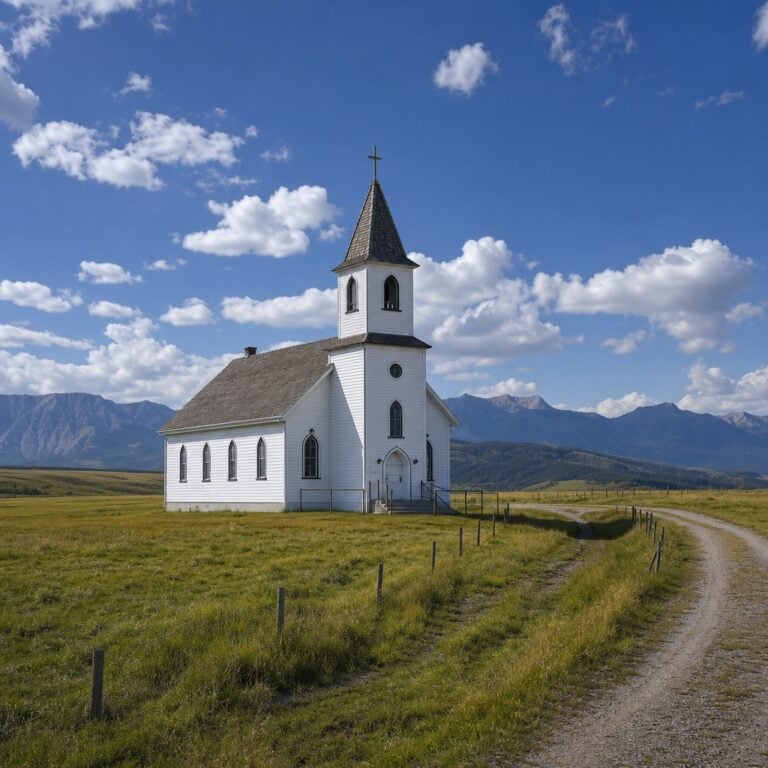
Drive north or east of Calgary and you will see them: small white churches with a steeple or a square tower, standing alone between fields. Many are more than a hundred years old. Some still hold Sunday services. Others have become museums or community halls, and a few have been lost to fire.
This last post in the series visits the prairie churches near Calgary and asks a simple question: what keeps a little country church standing? Part 1 covers the historic churches in Calgary, and Part 2 follows the foothills churches to the south.
Towns that grew along the rail line
Many prairie towns began as railway sidings. When the Calgary and Edmonton Railway arrived in 1890, surveyors laid out a siding, a station house and a townsite that became Carstairs (Carstairs, Alberta). Settlers followed, and churches were among the first public buildings they raised.
For scattered farm families, a church was more than a place of worship. It was where neighbours met, children learned, and families buried their dead. Ministers often served several congregations at once and travelled between them on horseback.
Carstairs: the oldest building in town
Knox Presbyterian Church in Carstairs was built in 1901. It is the town’s earliest formal place of worship, its oldest surviving building and an example of the Carpenter Gothic style (Mountain View Today).
Knox held services until 1985. It became a registered provincial historic resource in 1988, and the town later made it a municipal historic resource as well. Today the Carstairs and District Historical Society owns the building and uses it as part of the Carstairs Heritage Centre, a museum of the town and district, at 1138 Nanton Street.
Irricana United: a church built for Sunday school
About 10 kilometres west of Irricana, at Highway 567 and Range Road 274, stands a white church with a three-storey crenellated tower. It was built in 1919 by members of the Church of the Brethren, who had moved to the district from North Dakota after 1908. It replaced a smaller church in use since 1910 (Canadian Register of Historic Places).
The building follows the Akron plan, a design popular around 1900 that put religious education at the centre of church life. Pews are set on a diagonal. Small classrooms open off the sanctuary behind folding wooden doors, so one building could serve Sunday school and worship alike. A large metal baptismal tank sits in the corner, and two historic outhouses still stand in the churchyard.
The Province designated the church a Provincial Historic Resource in 2011. It is now Irricana United Church and still serves as a place of worship. You can find it in FaithFinder’s Irricana United Church listing.
Dalemead: a schoolhouse that became a church
Dalemead is a hamlet of about 100 people east of Calgary, near Langdon. Its church began in 1904, when a student minister named Fraser started holding services in a log home (Fitzhugh, Local Journalism Initiative).
The building the congregation uses today was built in 1908 as a school. Early on, Rev. Barry rode on horseback from Langdon, stayed overnight with a church family, and served two or three other churches in the county. In 1909, a newly arrived family named Whissen shut the door on him when he showed up late on a Saturday night. Mrs. Whissen, the story goes, was embarrassed when she saw him at church the next morning.
The church is now non-denominational. It began streaming services in spring 2020 and still offers a hybrid of in-person and online worship. The Dalemead cemetery dates from 1919.
Beiseker: St. Mary’s and a parish that began in a farmhouse
Beiseker began in 1908, when a large group of German settlers, many of them from North and South Dakota, arrived through the Calgary Colonization Company. The village is named for Thomas Beiseker, one of the company’s partners. The Canadian Pacific Railway arrived in 1910 (History of Beiseker).
Catholic worship began before there was a church. In 1907, Father L. Forget of the Tinchebray Fathers celebrated Mass in the home of Ludwig Schmalz and his family (Diocese of Calgary Archives). For the next few years, Mass was held in parish homes, with a priest coming from other rural communities when he could (Historic Places Days).
The small congregation began building in 1909, and its first church was completed in 1910. It stood on the site now occupied by St. Mary’s Cemetery. A rectory followed in 1914, Beiseker welcomed its first resident priest in 1920, and the church was enlarged in 1926.
By the 1950s the parish needed more room. The present church on 2nd Avenue was built in the mid-1950s and blessed in 1956 as the church of the Assumption of the Blessed Virgin Mary. The parish grew from 140 registered members in 1956 to 450 in 1972. By 1996, as young people moved away, it was back to 142, a pattern repeated across rural Alberta.
St. Mary’s welcomes visitors who call ahead (403-947-3775). If your family has roots in the area, the cemetery on the original church site is a good place to start. The Diocese of Calgary Archives holds parish letters from as early as 1909 and a 50th anniversary history from 1958, and the local history book Beiseker’s Golden Heritage is listed by Alberta Ancestors.
When a church closes or burns
Not every story ends with a full sanctuary. In Strathmore, the parish of St. Michael and All Angels Anglican held its final public service on April 27, 2025, after 116 years. Only about ten people were still attending. The parish chose to give its remaining resources to local agencies and to Indigenous parishes in its diocese, including St. John the Divine at Siksika (Strathmore Times).
The Beiseker Seventh-day Adventist Church in Wheatland County, a community gathering place since 1945 for weddings and milestones, burned in December 2023. Investigators ruled the fire arson (Global News). Its congregation kept meeting in the hall next door.
The McDougall church at Morley, west of Calgary, burned in 2017 and was restored using logs salvaged from the fire. Its story is part of our history of Christianity in the Bow Valley.
When a congregation closes, its records often survive. The Provincial Archives of Alberta, for example, holds the records of Acme United Church from 1909 to 1998. For anyone tracing family history, church registers and cemeteries are often the best place to start.
What keeps a prairie church standing
The churches that survive tend to share a few things. A congregation that still gathers, even a small one. Neighbours who show up for a pancake supper or a spring breakfast. A historical society willing to take on a roof. A heritage designation that protects the building’s character.
If a prairie church matters to you, there are simple ways to help:
- Attend a service or community event, even once a year.
- Give to a restoration fund or a local historical society.
- Share old photos and family stories with the church or local museum.
- If you lead a congregation, ask your municipality about heritage designation.
Visiting
Country churches are often locked outside service times, and some sit on private land or beside working farms. Check with the congregation or historical society before you go, keep gates as you find them, and walk cemeteries with respect.
Looking for a church near Calgary? Search FaithFinder’s Alberta church directory and choose Irricana, Carstairs, Dalemead, Strathmore or Beiseker.
Lead a rural congregation? Claiming your church’s FaithFinder listing is free, and helps visitors find your service times. Claim your listing.
Read the series: Prairie and Foothills Faith
- Historic churches in Calgary
- Historic churches south of Calgary
- Prairie churches near Calgary (you are here)
Image Attribution “Children outside catholic church, Beiseker, Alberta.”, 1910, (CU1116194) by unknown. Courtesy of Glenbow Library and Archives, Glenbow Archives Collection, Libraries and Cultural Resources Digital Collections, University of Calgary.